
Summer dermatitis: relieving itching naturally from the first signs
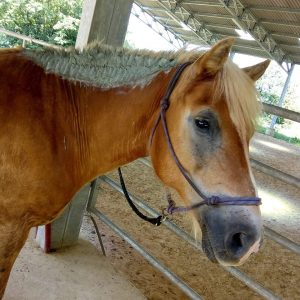
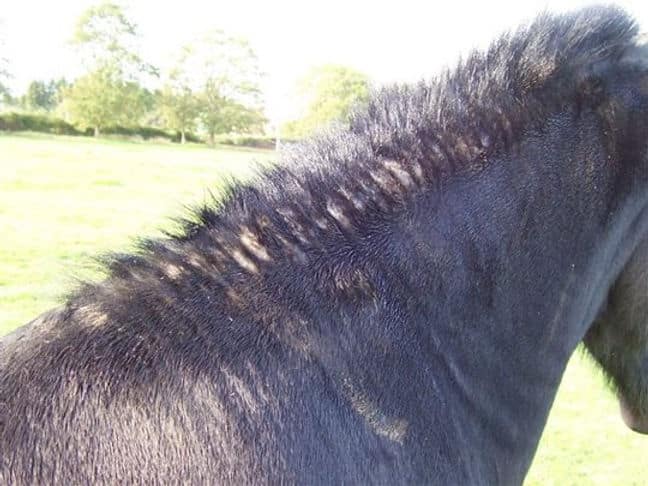
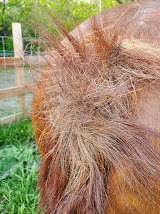
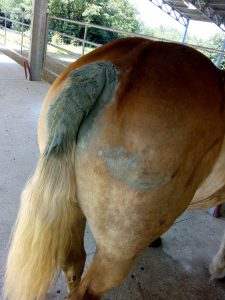
It's the start of the summer season! For some horse owners, it's also the return of a recurring problem: thinning manes, tail attachments that take on the appearance of a frizzy bouquet, and horses that sometimes scratch themselves until they bleed.
Summer dermatitis, also known as recurrent summer dermatitis, is one of the most frustrating skin conditions to manage. Affected horses can suffer from such intense itching that they end up self-mutilating.
This allergic reaction is caused by the bite of certain insects, including midges, gnats and small black flies.
The exact incidence of the disease remains difficult to establish. Depending on the geographic region, between 5% and 60% of the horse population could be affected. In British Columbia, a 2014 survey revealed that 26% of the 113,000 horses counted had this problem.
One thing is certain: summer dermatitis seems to be becoming an increasingly common nuisance in our stables.
Generally, black horses, overweight horses, and certain breeds seem more predisposed. However, any horse, pony, or miniature horse can suffer from it.
Personally, this issue often reminds me of horses with equine metabolic syndrome (EMS). Are they sometimes the same individuals? In many cases, I think so. That's why a comprehensive and holistic approach seems particularly valuable to me.
A simple solution to quickly soothe the skin
When itching appears, the first objective is to relieve the horse and soothe its skin.
It is precisely for this reason that I particularly appreciate the clay-based leave-in shampoo.
Made in Quebec and now available at over 120 retailers, this product cleanses, soothes, and refreshes the skin without rinsing. It is especially convenient for horses that live outdoors or when a full bath is difficult.
Over the years, this shampoo has proven effective on many itching and skin irritation problems, in horses, cattle and dogs.
From the first signs of scratching, it can be applied directly to sensitive areas to provide rapid relief while promoting better skin hygiene.
When the lesions are already significant or the horse has injured itself by scratching, I like to then supplement with a green clay poultice.
Thanks to its absorbent, soothing and antiseptic properties, clay helps support healing while creating a protective barrier on irritated areas.
For more severe cases, the Green Clay Soap from our range can also be used. Simply rub the affected areas gently with the wet soap, rinse quickly, allow to dry, and then apply the clay poultice.
Prevention remains our best ally
Based on my reading, training, field experience and approach to natural care, prevention often remains the most effective strategy.
Ideally, this should begin at the end of winter, in February or March.
Among the interesting nutritional approaches are:
- Freshly ground or extruded flaxseed;
- Dried nettle administered for a few weeks in the spring;
- Seasonal internal clay treatments;
- Optimal management of diet and body weight.
Nettle is particularly interesting because it possesses natural antihistamine properties. However, I do not recommend its continuous use throughout the year, as it also has a diuretic effect.
As I often say: natural does not mean harmless. Natural products also deserve to be used with discernment and accompanied by appropriate professional advice.
The promising role of omega-3
Omega-3s are among the most promising nutritional approaches in the management of summer dermatitis.
For several decades, scientific literature has recognized their importance for skin and coat health.
Freshly ground or extruded flaxseed is an excellent and readily available source of omega-3 and also appears to have an interesting anti-inflammatory effect.
This hypothesis was notably evaluated by the Equine Research Centre at the University of Guelph. In this study, horses suffering from sweet itch received 50 grams of ground linseed meal daily for 42 days. The results demonstrated a significant reduction in the allergic skin reaction to Culicoides extracts.
Reduce exposure to insects
Fly sheets, protective masks, and insect repellents can also contribute to the comfort of sensitive horses. However, their duration of action is often limited, and applications must be repeated frequently.
Personally, I particularly appreciate using a green clay poultice applied to the most sensitive areas. In addition to relieving existing itching, the clay forms a natural physical barrier that can help limit new bites. Unlike many spray products that evaporate quickly, clay stays in place for several hours and continues to provide protection.
Since the skin is the body's largest organ and a major eliminatory organ, I always favor, whenever possible, simple and natural approaches that better respect its balance. Observing animals living in the wild is often inspiring: many species instinctively use mud or clay to protect themselves from insects and soothe their skin.
In conclusion
As in all situations affecting the health of our horses, everyone does their best according to their knowledge, beliefs and budget.
The important thing is to implement a comprehensive strategy combining prevention, appropriate nutrition, protection against insects and effective local treatments.
For many homeowners, the clay-based no-rinse shampoo has become a valuable ally for getting through the summer season more comfortably.
I invite you to consult our retailer locator to find the nearest point of sale to you or to visit our online store to purchase and try it out.
Have a wonderful summer season, you and your horses!
Sincerely,
Sylvie Moser
Sources:
Dr. Wendy Pearson, PhD (Veterinary Toxicology)
Original article published in the Canadian Horse Journal


As usual, if you have any doubts or questions, your veterinarian is your contact person.